
INTRODUCTION
In every laboratory—whether it’s clinical, educational, or research-based—microscopes play a key role in observing and analyzing microscopic samples. But just like any other scientific instrument, a microscope must be calibrated regularly to ensure that the measurements you see through the eyepiece are accurate and reliable.
In this blog, we’ll explore what microscope calibration is, why it’s important, and how to perform it step-by-step. Let’s make it simple and clear so you can understand and apply it easily in your own lab.
What is Microscope Calibration?
Microscope calibration is the process of standardizing the magnification and measurement accuracy of your microscope. In simple words, it ensures that when you measure something under the microscope (like cell size or particle diameter), the value you get truly reflects its real-world size.
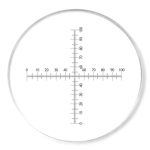
Calibration aligns your ocular micrometer (the scale inside the eyepiece) with a stage micrometer (a slide with a known scale) so that every division or unit you see has a defined measurement value—usually in micrometers (µm).
Why is Calibration Important?
Regular calibration of your microscope is crucial for several reasons:
Accuracy of Measurements: Ensures your sample dimensions are correct and consistent.
Reliable Data: Provides dependable results for research, diagnosis, and quality testing.
Instrument Performance: Detects and corrects errors caused by wear or misalignment.
Compliance: Meets the standards required by ISO, GLP, or other quality systems.
Reproducibility: Allows results to be compared accurately over time or between labs.
Without proper calibration, even the best microscopes can give misleading data, leading to wrong conclusions or rejected lab reports.
Equipment Required for Calibration
To calibrate a microscope properly, you will need the following:
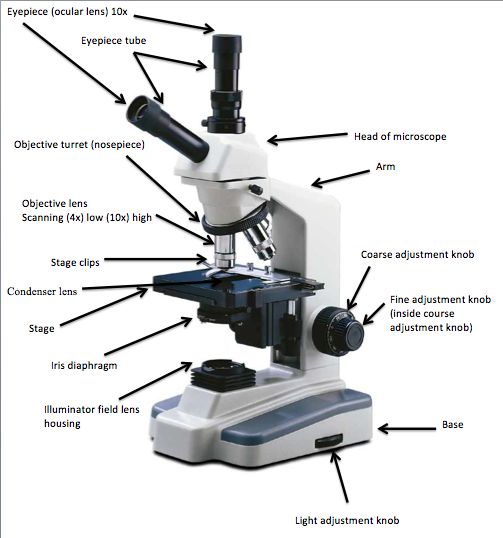
Microscope (compound or stereo)
Ocular Micrometer (inside the eyepiece)
Stage Micrometer (a slide with a scale, usually 1mm divided into 100 parts = 0.01mm each)
Clean Lens Tissue
Distilled Water and Cleaning Solution


Step-by-Step Procedure for Microscope Calibration
Follow these simple steps to calibrate your microscope accurately:
Step 1: Clean the Microscope
Use lens tissue and cleaning solution to gently clean the eyepiece, objective lens, and stage micrometer. Dust or fingerprints can affect your measurements.
Step 2: Place the Stage Micrometer
Put the stage micrometer on the stage and focus it clearly under the lowest magnification (usually 10x objective).
Step 3: Align the Scales
Look through the eyepiece. You will see both the ocular micrometer scale and the stage micrometer scale. Align them so that the zero marks on both scales coincide.
Step 4: Find the Coinciding Points
Look for another point on the scale where both micrometers’ lines coincide again. Count how many divisions of the ocular micrometer correspond to a specific number of divisions on the stage micrometer.
Step 5: Calculate the Calibration Factor
Use this formula to determine the value of each division in your ocular micrometer:
Value of one ocular division=Number of stage divisions×Value of one stage divisionNumber of ocular divisions\text{Value of one ocular division} = \frac{\text{Number of stage divisions} \times \text{Value of one stage division}}{\text{Number of ocular divisions}}Value of one ocular division=Number of ocular divisionsNumber of stage divisions×Value of one stage division
For example:
If 10 ocular divisions = 20 stage divisions, and one stage division = 0.01 mm, then:
20×0.0110=0.02 mm per ocular division (or 20 µm)\frac{20 \times 0.01}{10} = 0.02 \, \text{mm per ocular division (or 20 µm)}1020×0.01=0.02mm per ocular division (or 20 µm)
Step 6: Repeat for Each Objective Lens
Repeat the process for all objectives (10x, 40x, 100x) because each magnification changes the calibration factor.
Step 7: Record the Calibration Data
Write down the calibration values for each magnification and keep them in your microscope logbook or label them on the instrument for reference.
Tips for Accurate Calibration
Always use clean lenses and slides to avoid distortion.
Allow your microscope to stabilize before calibration.
Calibrate regularly—at least once every 3–6 months or after any maintenance.
If you frequently switch eyepieces or objectives, recalibrate immediately.
Maintain a calibration record sheet for audits and traceability.
Benefits of Regular Microscope Calibration
Regular microscope calibration offers many long-term advantages:
Improved image accuracy
Reduced experimental errors
Enhanced quality control in testing and research
Compliance with ISO and GLP standards
Extended instrument lifespan
When Should You Recalibrate Your Microscope?
You should recalibrate your microscope when:
The microscope is moved or relocated
A new eyepiece or objective is installed
After servicing or cleaning
If you notice measurement inconsistencies
On a scheduled calibration cycle (e.g., quarterly or annually)
Calibrating your microscope is not just a technical task—it’s a crucial step in ensuring accuracy, consistency, and reliability in every observation and measurement you make. By following the simple steps above, you can keep your microscope performing at its best and maintain the integrity of your lab results.
Remember, a well-calibrated microscope means trustworthy science.